AI Code Review
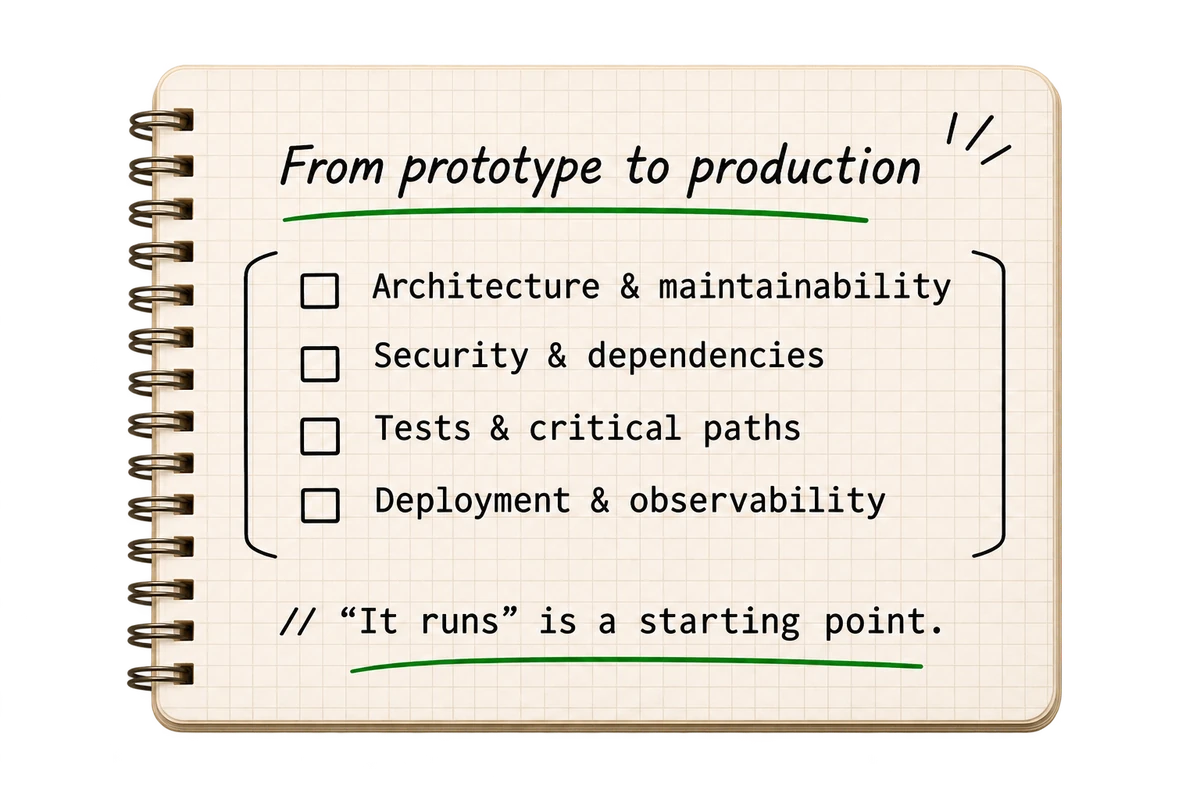
An independent assessment of AI-built applications: architecture, security risks, dependencies and meaningful test coverage.
Deliverable → Findings & prioritised action plan
Review my project Cristian Costantini
Software architect / engineer
I review AI-generated software, uncover engineering risks, and help turn promising prototypes into maintainable systems.
01 / Services
An independent assessment of AI-built applications: architecture, security risks, dependencies and meaningful test coverage.
Deliverable → Findings & prioritised action plan
Review my projectUntangle complex code, clarify boundaries and improve the parts that make change expensive.
Deliverable → Architecture roadmap & targeted fixes
Strengthen the foundationsConnect applications, APIs and business workflows with reliable, observable integrations.
Deliverable → Working, documented integrations
Connect your systems02 / About me
I’m Cristian Costantini, a software architect and engineer. My work focuses on Java and Spring, software architecture and systems integration.
I’m interested in what happens after the first working version: how clearly the code communicates its intent, how easily it can change, and how it behaves when something goes wrong. That’s the perspective I bring to AI-generated software, too.
More about me on LinkedIn03 / Engineering in the open
Open-source work, architecture decisions and engineering experiments.
04 / Publications — Coming soon
The code looks confident.
Should you?
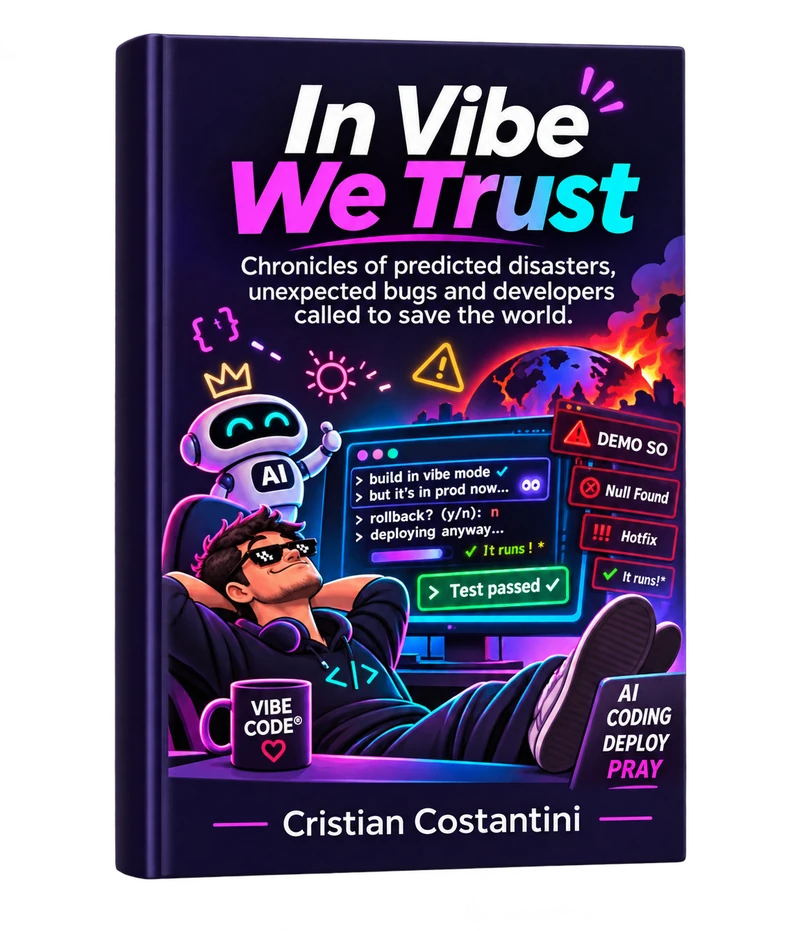
Stories of predicted disasters, unexpected bugs, and developers called in when the demo meets production.
In Vibe We Trust is an upcoming book by Cristian Costantini about AI-assisted development and the engineering work between a convincing demo and production. Publication details will be shared here.
05 / FAQ
Yes. I assess the code and technical decisions behind the project: architecture, dependencies, security and tests. The aim is to understand what works, which risks need attention and what to improve before moving forward.
Access to the code, instructions for running the application and a short description of what it should do. Known issues and your priorities are useful, too.
A report describing the findings, their impact and a prioritised action plan. Recommendations refer to the code, so you can use them to plan the work.
Assessment and implementation have separate scopes. We can agree on targeted refactoring, testing or integration work based on the review findings.
That depends on the size of the codebase, the complexity of the system and the depth of the review. Scope, timing and cost are defined after an initial assessment of the project.
A review helps identify risks and supports better-informed decisions. Production readiness also requires checks in the real environment, appropriate testing, monitoring and operational procedures.
06 / Contact
Tell me what you’re building, what worries you, and where you need a second pair of eyes.